

The 38-Inch Bowl
Before I ordered the 38-inch crystal bowl, I measured everything.
I measured the studio. I measured the doorway. I did the calculations. I knew the bowl was wider than the door, so I knew I would have to turn it on its side to get it into the room. I knew where it could go. I knew, at least mathematically, exactly how large it was going to be.
Then it arrived.
It came in an enormous wooden crate. I opened the crate, started pulling away the packing material, and finally saw the bowl for the first time.
I started laughing.
Not a little laugh. I couldn't stop.
There was something completely absurd about it. I had known every measurement, but none of that had prepared me for actually standing in front of a crystal bowl nearly three feet across.
There are some things you can understand perfectly well as information and still know nothing about as an experience.
The bowl was one of them.
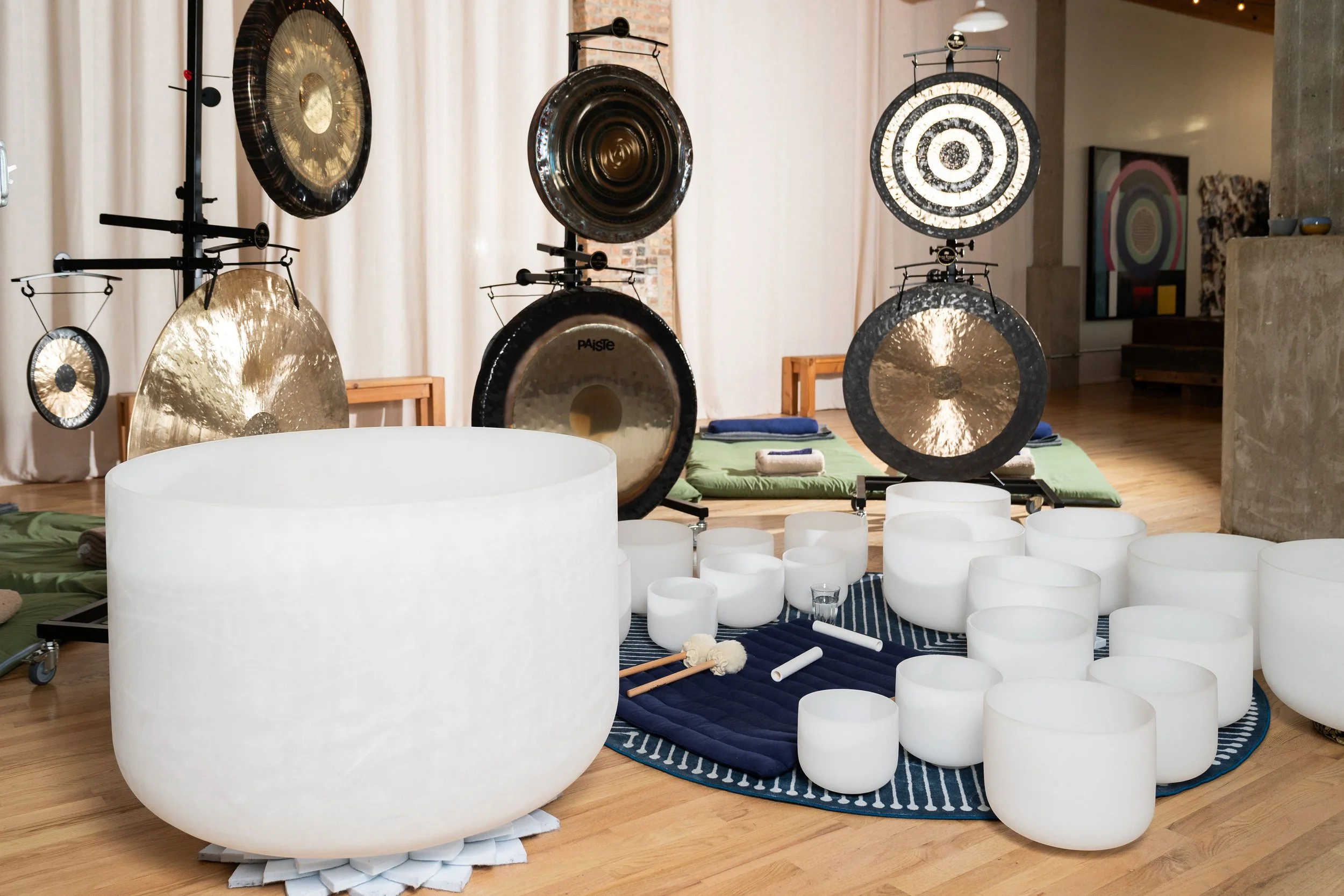
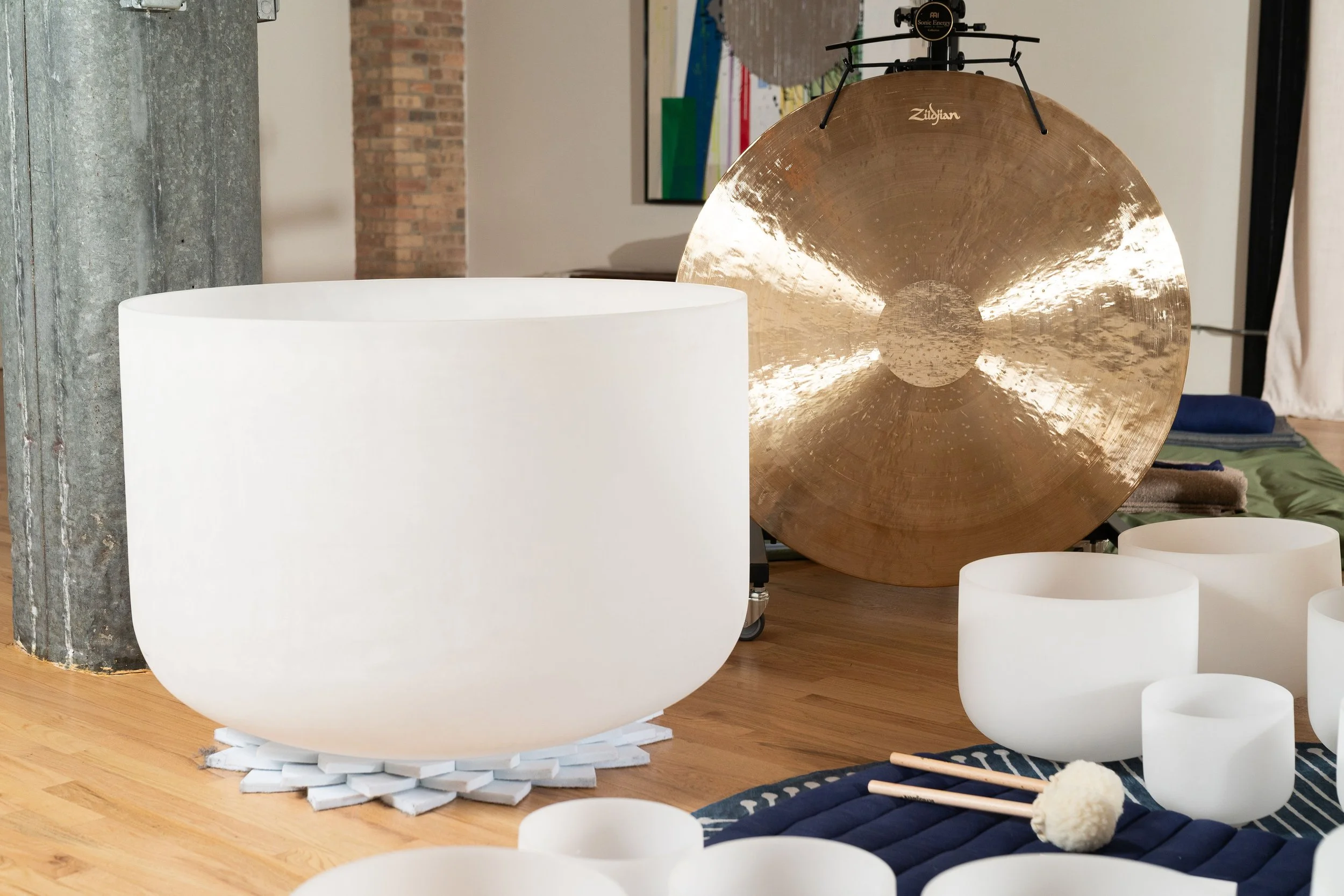
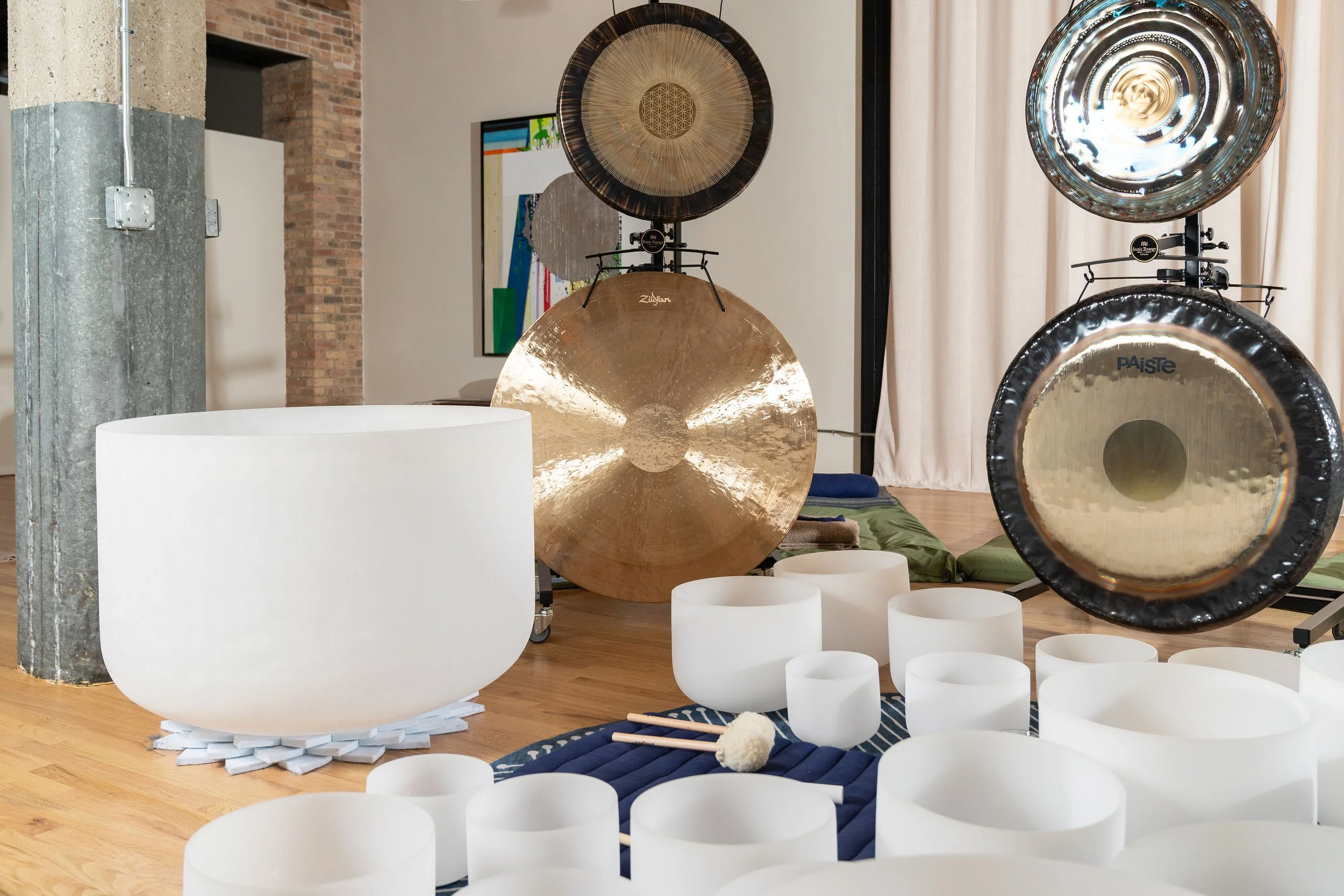
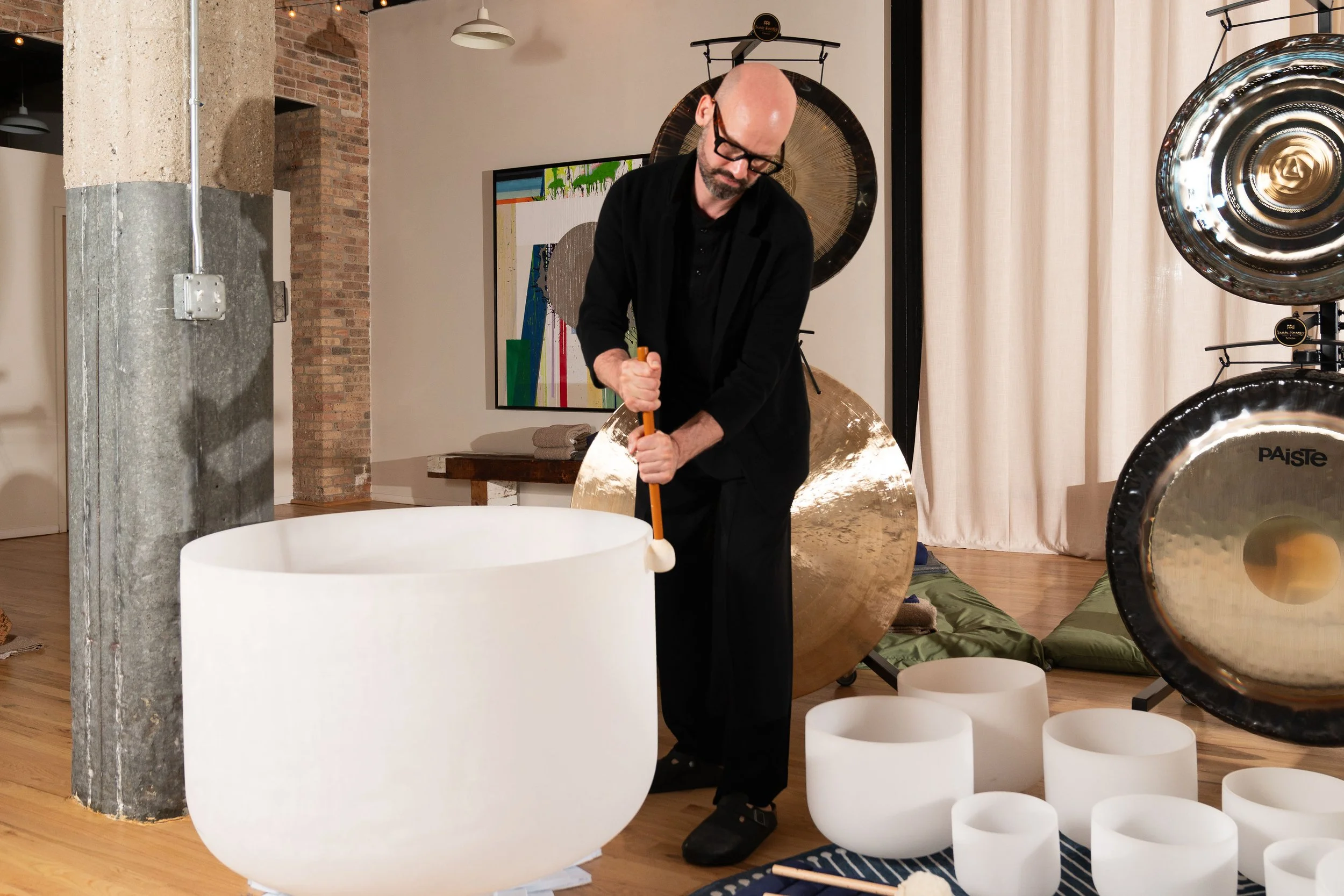
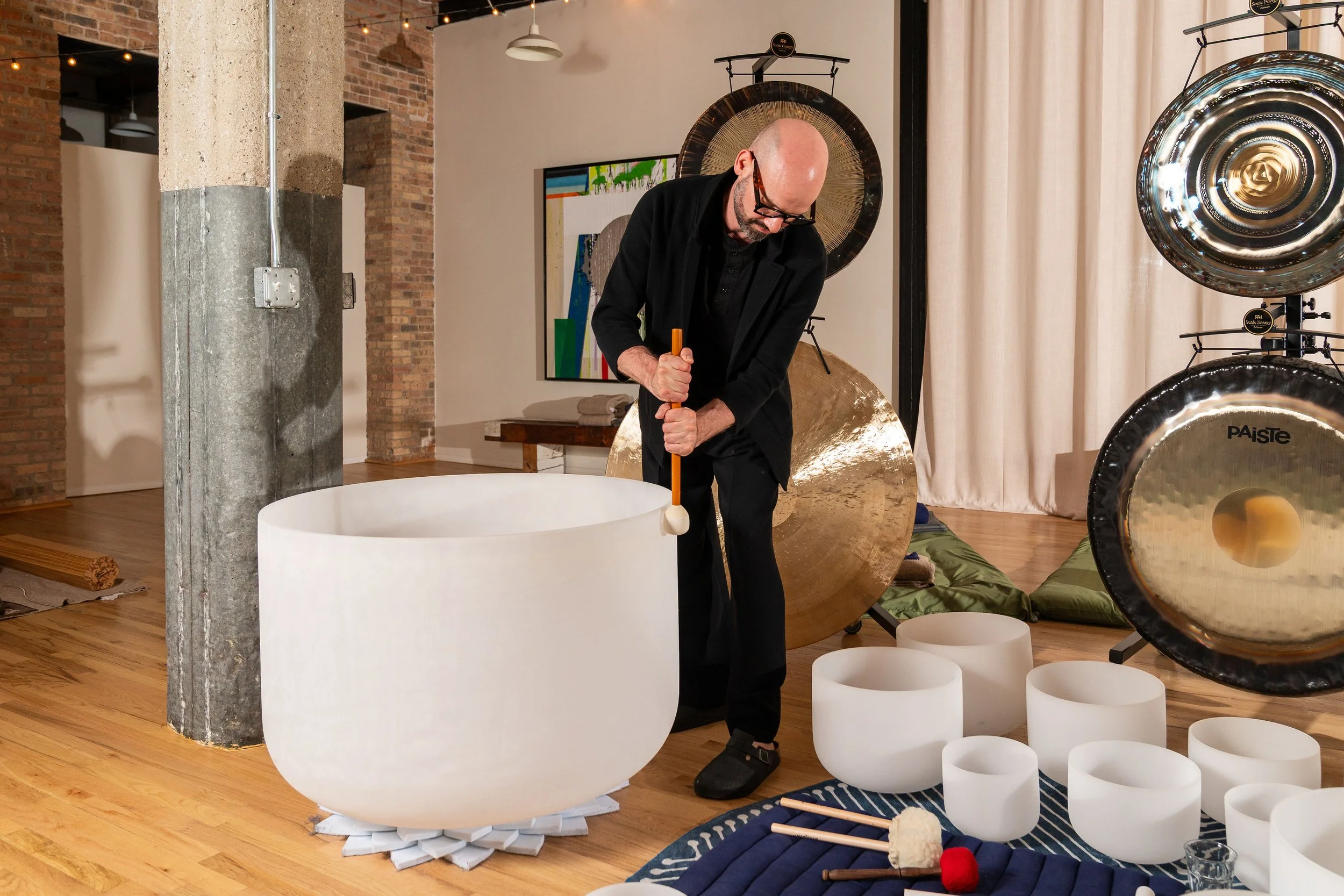
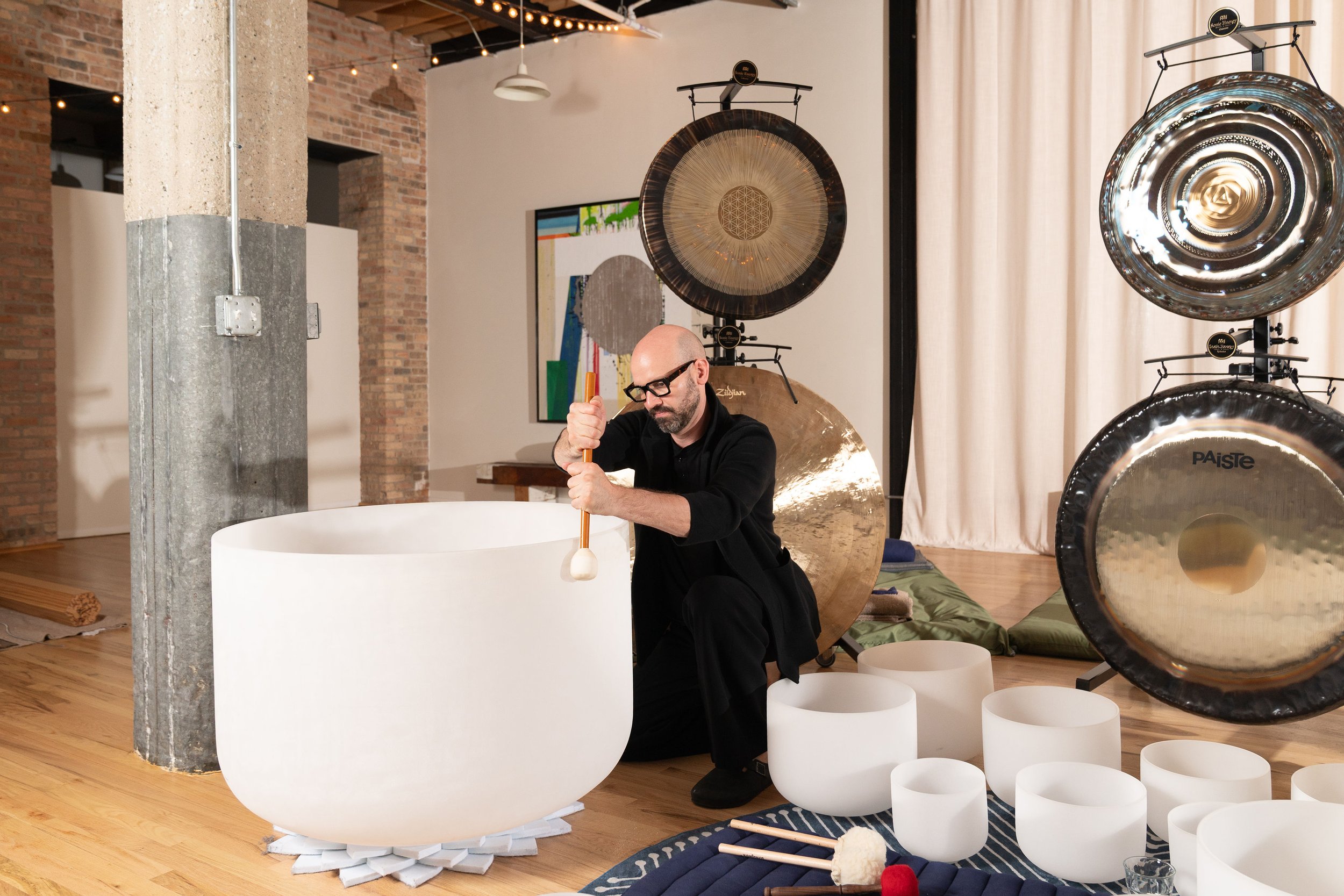
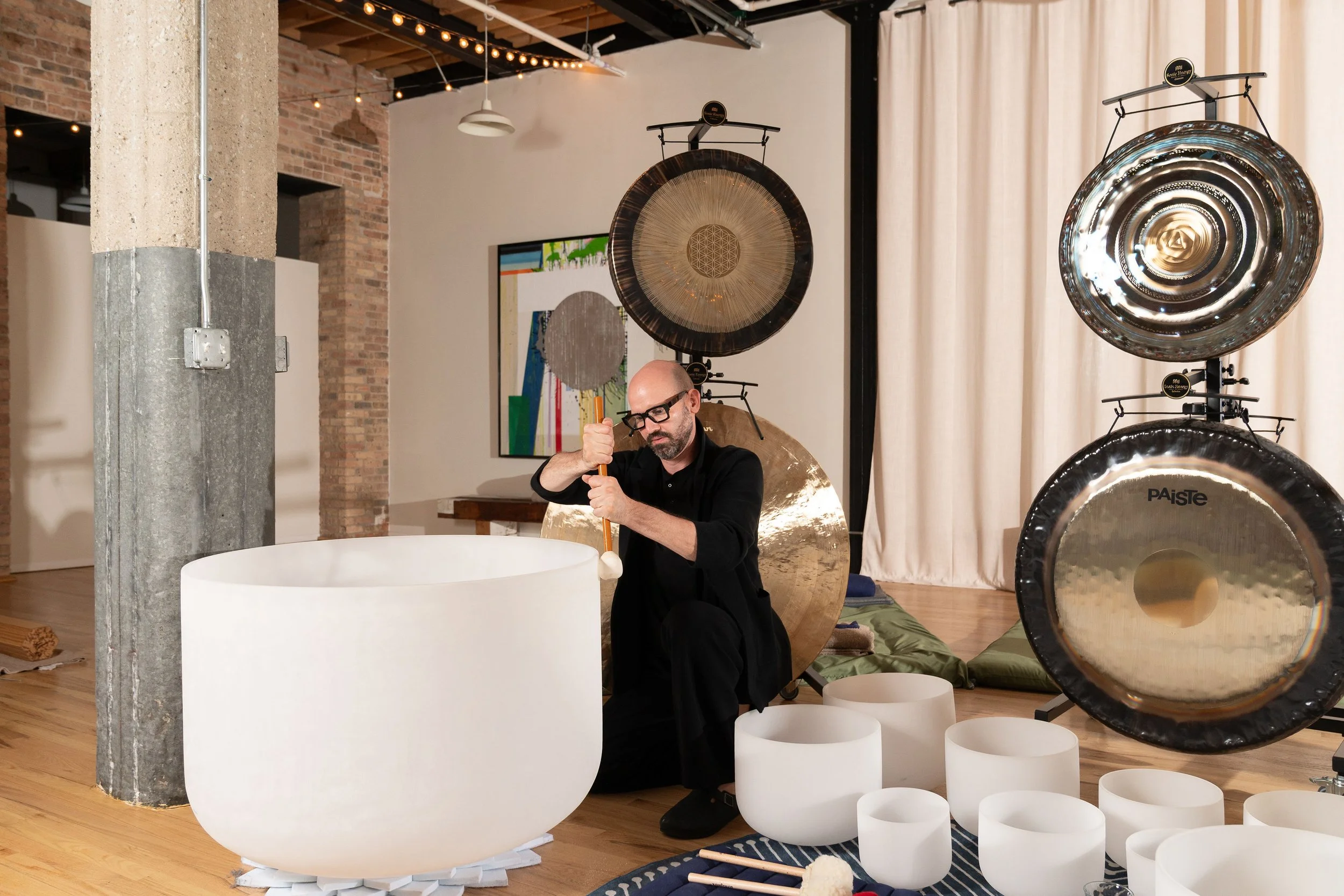
At first, I wasn't entirely sure what I was going to do with it.
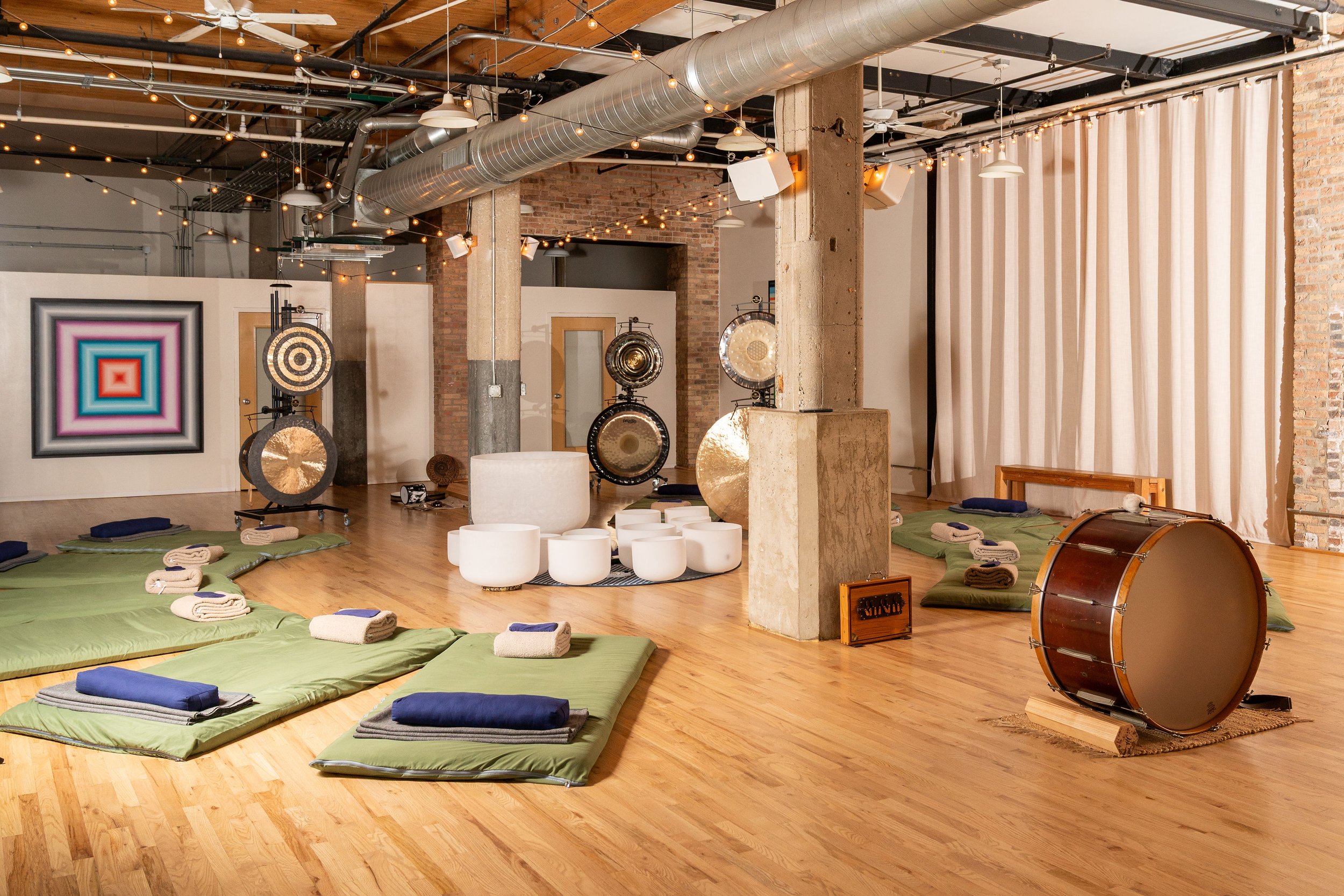
A bowl that size isn't just another note to add to a collection. It changes the room. People notice it as soon as they walk in. Before they've heard it, they already have some relationship with it.
And then I play it.
Over time, the bowl has become one of the larger moments in some of my sound baths. Not simply because it is loud or low or impressive, but because of what seems to happen when people encounter that much vibration.
You don't just hear this bowl.
You feel it.
And that feeling isn't always immediately comfortable.
The vibration can feel enormous. When it moves easily through the body, there can be an extraordinary sense of being surrounded by sound. But people sometimes describe certain areas as feeling almost pressurized, as though the vibration has arrived somewhere it can't quite move through.
I've watched people become visibly uneasy the first time they experience it. Occasionally someone tells me afterward that, for a moment, they thought they might panic.
What interests me is what sometimes happens next.
They breathe.
They stay with the sensation.
They realize that they can experience something intense without immediately needing it to stop.
And eventually the bowl fades.
The first experience can be difficult. The second is often different. By the third or fourth, some of the same people who weren't sure they liked the bowl begin looking forward to it.
A few have told me they crave it.
I don't think the bowl changed.
I think their relationship to what they were feeling changed.
And maybe that is what I find most interesting about it now.
The bowl has become a kind of reference point.
I have something similar in my Bikram yoga practice. The room is hot. The sequence is the same. The postures are the same. In that repetition, the practice becomes a way of sensing myself.
If yesterday I could stand calmly in something and today I desperately want to escape it, that is information.
The practice hasn't necessarily changed.
I have.
I've begun to think about the 38-inch bowl in much the same way.
It doesn't diagnose anything. I don't think sound is magically identifying some hidden problem in the body. But it creates an experience intense enough that it can become difficult not to notice yourself.
Where do I tighten?
Where do I resist?
What happens to my breathing?
Do I want the sensation to stop?
Can I stay curious about it instead?
And when I encounter the bowl again a week or a month later, is my response the same?
That is a different way of listening.
It's less about asking whether a sound is beautiful or relaxing and more about noticing what happens in me when I meet it.
The actual technique of playing the bowl has been something I've had to discover too.
I usually begin by striking it three times with a rubber mallet. Partly this announces what is coming, but it also gets this enormous mass of crystal moving.
Then I begin to rub the rim.
For a long time, I assumed I should travel continuously around the circumference, the way I would with a smaller singing bowl. Recently I've been experimenting with working the mallet back and forth across a section of only about twelve inches.
Strangely, that seems to build even more intensity.
Once it is fully ringing, I stop.
And wait.
And keep waiting.
One of the first things this bowl taught me was how deceptive decay can be. I will think the sound is gone, put my arm inside the bowl, and discover that the crystal is still vibrating. Sometimes I gently touch the inside just to confirm that it has actually become still.
What comes afterward matters too.
It can be difficult to follow something that large with another sound. Most instruments suddenly seem small. I've found that my Paiste Symphonic gong can cut through the remaining field particularly well. Other times I'll use chimes. Sometimes I simply return to the crystal bowls and allow the room to rebuild itself from something quieter.
I'm still experimenting.
I suspect I always will be.
When I bought the bowl, I thought I was buying an unusually large musical instrument.
What I ended up with feels more like a presence in the room.
It is ridiculous. Beautiful. Occasionally overwhelming.
And every time I play it, it asks essentially the same thing:
What happens when you stop trying to decide how this should feel and simply notice how it feels today?